Pressure Washing vs Soft Washing: What's the Difference?
Ask two homeowners in Spring Hill what they had done to their house last spring and one will say pressure washing while the other says soft washing. The terms get used interchangeably, but they describe genuinely different processes, and using the wrong one on the wrong surface is how siding gets damaged and roofs lose shingle granules. Here is what actually separates the two, and how to tell which your property needs.
The Core Difference Is Pressure
Pressure washing relies on force. Water is driven through a narrow tip at high pressure and the mechanical impact lifts dirt, stains, and growth off the surface. It is fast and effective on hard, durable materials.
Soft washing relies on chemistry. Water pressure is kept low, closer to what comes out of a strong garden hose, and the cleaning is done by a solution that kills mold, mildew, algae, and bacteria at the root. The surface is then rinsed gently. Nothing is being blasted away, so nothing gets eroded.
Put simply: pressure washing removes what is on top of the surface, and soft washing kills what is growing in it.
Why That Distinction Matters in Florida
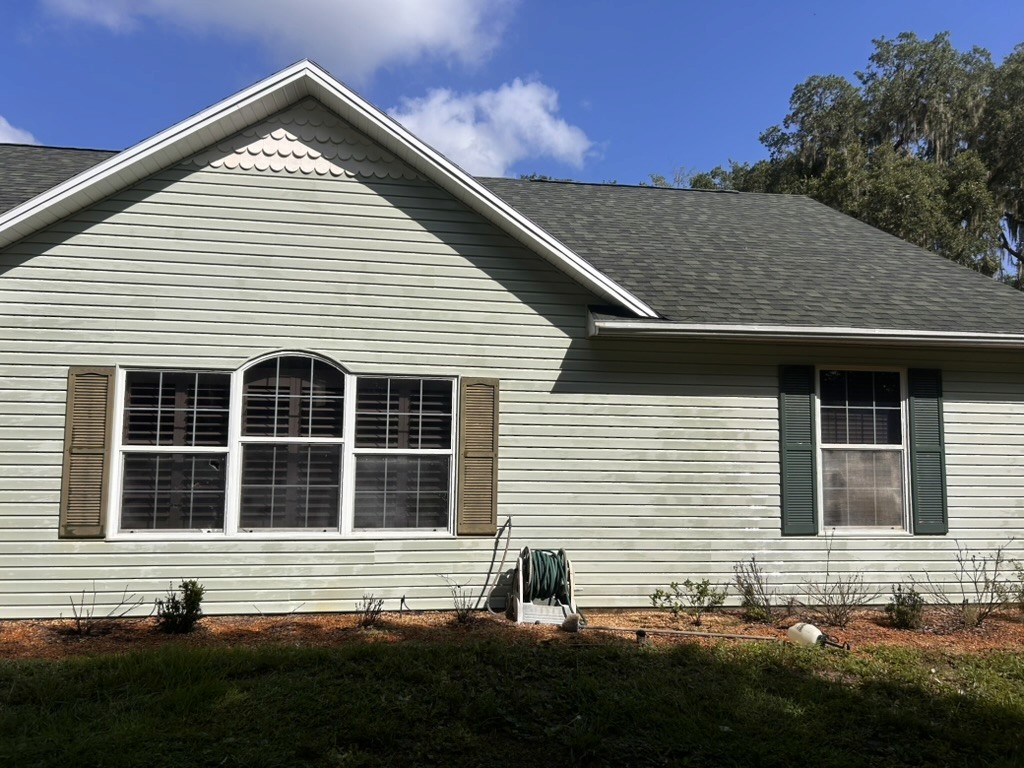
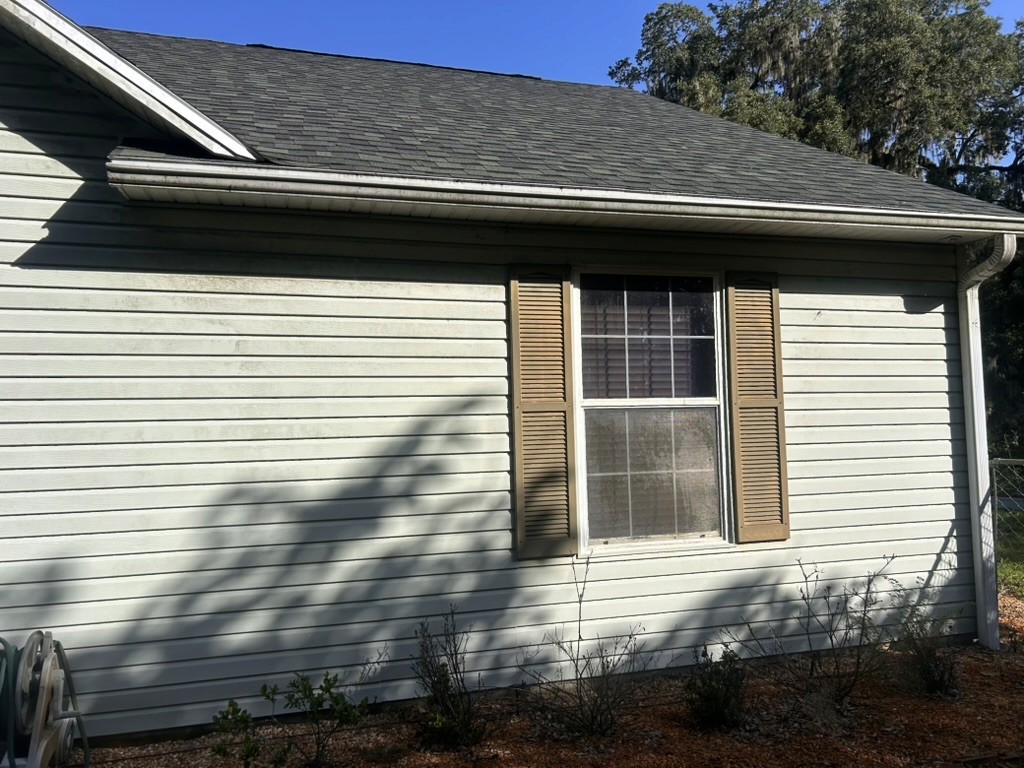
Most of the discoloration on a Hernando County home is living. Black roof streaking is algae. The green film on a shaded north wall is algae too. The gray-black spotting under soffits is mildew. If you only knock that growth off with pressure, the spores stay behind and it comes back quickly. If you kill it, the surface stays clean noticeably longer.
That is why the standard for house exteriors and roofs in Florida is soft washing, not high pressure. It is a better result and a safer one. We cover the underlying causes in more depth in why Florida homes get algae, mold, and mildew so quickly.
What Gets Soft Washed
Roofs of any type, including asphalt shingle, tile, and metal
Painted siding, vinyl siding, and stucco
Soffits, fascia, and gutter exteriors
Lanai and pool cage screening
Wood fencing and older wood decking
Painted or coated surfaces of any kind
The common thread is that all of these are either fragile, porous, painted, or assembled in overlapping panels where forced water can get behind the surface and cause hidden damage.
What Gets Pressure Washed
Concrete driveways, sidewalks, and walkways
Paver driveways and patios (at controlled pressure)
Pool decks, with pressure adjusted for the finish
Brick and block in sound condition
Curbing, steps, and hardscape
These are dense, non-porous or semi-porous surfaces that can take mechanical force. On flat concrete, a surface cleaner attachment is used rather than an open wand, because it applies even coverage and avoids the striping you see when someone waves a pressure wand back and forth across a driveway.
Where the Two Methods Overlap
A lot of real jobs use both. A typical house wash might involve soft washing the siding, soffits, and screen enclosure, then pressure washing the driveway, walkway, and pool deck on the same visit. The equipment is largely the same. What changes is the tip, the pressure setting, the distance from the surface, and whether a cleaning solution is being applied first.
There is also a middle ground. Pavers and some concrete respond best to a cleaning solution applied first to kill growth, followed by controlled pressure to lift the residue. That combination gets a deeper clean than either approach alone.
What Goes Wrong When the Wrong Method Is Used
High Pressure on Siding
Water forced up under lap siding or into stucco cracks does not dry out quickly in Florida humidity. That trapped moisture is a far bigger problem than the algae you were trying to remove. High pressure also strips paint and leaves visible wand marks.
High Pressure on a Roof
This is the most expensive mistake. Pressure removes the granules that protect asphalt shingles and shortens the roof's life. On tile it can crack or dislodge pieces and drive water under the tile. Roof manufacturers and industry guidance point to low-pressure cleaning for this reason. There is more detail in is soft washing safe for your roof.
High Pressure on Wood
Wood fencing and decking splinter and furr up when hit with too much pressure. The board looks clean for a season and then weathers faster than it should because the surface fibers have been torn open.
Soft Washing Alone on Heavy Concrete Staining
The reverse mistake is less damaging but still disappointing. Ground-in tire marks, oil, and rust on a driveway will not come out with a low-pressure rinse. That surface needs mechanical cleaning.
How to Tell What Your Property Needs
A quick way to think about it:
If you can walk on it and it is concrete or stone, it is probably a pressure washing job
If it is part of the building envelope, painted, or screened, it is probably a soft washing job
If the stain is green, black, or streaky, it is biological and needs a cleaning solution regardless of method
If the stain is oil, rust, or rubber, it is mechanical and needs pressure
A reputable company will walk the property and tell you which surfaces get which treatment before any work starts. If someone proposes putting a high-pressure tip on your roof or your painted siding, that is a reason to keep looking.
Frequently Asked Questions
Is soft washing less effective than pressure washing?
No. On surfaces where growth is the problem, soft washing is more effective, because it kills the organism instead of just displacing it. It is only less effective on hard stains like oil and rust, which are not biological.
Are the cleaning solutions safe around plants and pets?
Handled properly, yes. The standard practice is to pre-wet landscaping, keep application controlled, and rinse thoroughly afterward. Pets and children should stay indoors while work is underway, as with any exterior service.
Can I soft wash my own house?
Consumer pressure washers are not built to apply and rinse a soft wash solution at height, and mixing cleaning chemistry without training is where homeowners get into trouble. Ladder work on a two-story wall or a roof adds real risk. We weigh this up in professional versus DIY pressure washing.
Will soft washing remove roof streaks permanently?
It removes them thoroughly, but nothing is permanent in a humid climate. Airborne spores land on roofs continuously, so growth eventually returns. Cleaning simply resets the clock.
Choosing the Right Approach for Your Home
The right question is not which method is better, but which method belongs on which surface. Most Hernando County homes need both: a low-pressure soft wash for the roof, siding, and screens, and controlled pressure washing for the driveway, walkway, and pool deck.
Liberty Power Wash uses both methods across Weeki Wachee, Spring Hill, Brooksville, Hernando Beach, and the surrounding area, matched to what each surface can safely take. Reach out for a free estimate and we will tell you exactly what your property needs and why.