Why Florida Homes Get Algae, Mold, and Mildew So Quickly
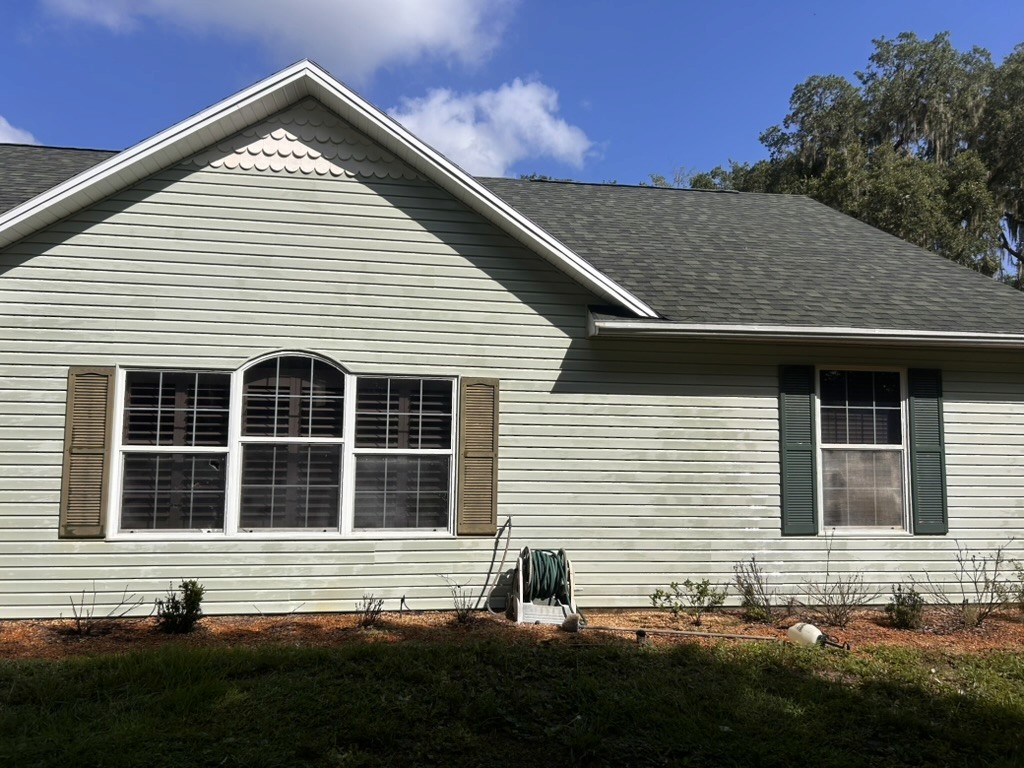
If you moved to Hernando County from somewhere drier, the speed at which a clean house turns green here can be genuinely surprising. A wall that was spotless in March can show a shadow of growth by August. It is not that Florida homes are dirtier. It is that the climate here is close to ideal for the organisms that cause the staining, and they are working year round.
What Is Actually Growing on Your House
Most exterior discoloration in Florida is biological. Three different things are usually involved, and they look different once you know what to look for.
Algae
Algae shows up as green film on siding and fences, and as the dark streaks that run down roof slopes. The roof version is commonly a blue-green algae that feeds on the limestone filler used in asphalt shingles, which is why it can colonize a roof that looks otherwise clean. It needs moisture and it spreads by airborne spores, which is why one house on a street getting streaky is often followed by its neighbors.
Mildew and Mold
Mildew appears as flat gray, black, or brown spotting, usually on shaded siding, under soffits, around window frames, and on screen enclosures. It grows on the film of organic material that settles on any outdoor surface, so it does not need the surface itself to be organic.
Lichen and Moss
Lichen is the crusty, raised growth that appears on roofs, north-facing walls, and pavers that stay damp. It attaches firmly and is more stubborn than algae. Moss shows up in the same conditions, typically in shaded joints and along roof valleys.
Why Growth Is So Fast Here
Humidity That Never Really Breaks
Mold and algae need moisture, and along the Nature Coast they get it almost constantly. Even on days without rain, overnight humidity leaves surfaces damp until well into the morning. In drier climates a wall dries within an hour of sunrise and growth stalls. Here it rarely gets that chance.
Warmth Year Round
Cold weather is what limits biological growth in most of the country. Hernando County has short, mild winters, so there is no real dormant season. Growth that starts in April keeps going through December.
A Long Rainy Season
Afternoon storms through the summer keep surfaces wet, and rain splash carries soil and organic debris onto the lower portion of walls. This is why the bottom three feet of siding almost always look worse than the rest.
Shade and Tree Canopy
Neighborhoods with mature oak and pine cover, including much of Timber Pines and the older sections of Spring Hill and Brooksville, hold moisture far longer. A shaded north wall can be several shades darker than the sunny south wall of the same house.
Coastal Air
Nearer the water in Hernando Beach and Weeki Wachee Gardens, salt in the air settles on surfaces and attracts moisture, keeping them damp longer and adding a dulling film of its own.
Irrigation and Landscaping
Sprinklers that spray the house keep the wall wet on a schedule. Well water adds rust and mineral staining on top of that. Mulch beds and shrubs planted tight against the foundation trap humidity right where siding meets the ground.
Why It Matters Beyond Appearance
It is easy to treat this as a cosmetic issue, and for a while it is. Left alone, though, it starts to cost money.
Roof life. Algae and lichen hold moisture against shingles and lichen can lift granules as it grows, which shortens the life of the roof.
Paint and finish. Growth traps moisture against painted surfaces and accelerates peeling and chalking.
Wood. Persistent damp plus organic growth is how fence pickets and deck boards start to soften and rot.
Safety. Algae on a walkway, pool deck, or paver path makes it slippery when wet, which is the most immediate risk on this list.
Air quality near the house. Heavy mildew on a screen enclosure or lanai is not something you want to sit next to.
Property value. A streaked roof and green-shadowed siding read as neglect to buyers, whatever the condition of the home underneath.
Why Rinsing It Off Does Not Work
Spraying growth off with water removes the visible layer but leaves the organism established in the pores of the surface. It regrows from what remains, usually within weeks in summer. Effective treatment uses a cleaning solution that kills the growth, then a gentle rinse. That is the basis of soft washing, and it is why a soft washed house stays clean much longer than a rinsed one. The two approaches are compared in pressure washing vs soft washing.
The other reason not to reach for the pressure washer is that most of the surfaces affected, including roofs, siding, stucco, and screens, are exactly the surfaces high pressure damages.
What You Can Do Between Cleanings
Adjust sprinkler heads so they water the lawn rather than the house
Trim shrubs and tree limbs back from walls and the roof to let sun and air reach the surface
Keep gutters clear so water is not spilling down the wall during storms
Pull mulch back a few inches from the foundation and siding
Clear leaf debris off flat roof sections, valleys, and pavers, since decaying debris is a food source
None of this stops growth in a Florida climate, but it slows it down and stretches the time between cleanings.
Frequently Asked Questions
Is the black streaking on my roof mold?
Usually it is algae rather than mold. It is not structurally urgent on day one, but it does hold moisture on the roof and it spreads, so it is worth addressing rather than ignoring.
Why is only one side of my house green?
Almost always because that side gets less sun. North-facing walls and any wall shaded by trees or a neighboring structure stay damp longer, so growth establishes there first.
Will bleach from a hardware store fix it?
Household bleach applied without the right dilution, dwell time, and rinsing can damage plants, discolor surfaces, and leave streaks. It also does nothing about the parts of a two-story wall or roof you cannot safely reach.
How soon does it come back?
That depends on shade, moisture, and proximity to vegetation. A properly treated home in a sunny location often looks good for a year or more, while a heavily shaded home near water may need attention sooner. Our guide on how often to pressure wash a Florida home breaks it down by surface.
Getting Ahead of It
Algae, mold, and mildew are simply part of owning a home in this climate. They are not a sign that anything is wrong with your house. What matters is catching growth before it has years to work into the surface, and using a method that kills it rather than one that damages the material underneath.
Liberty Power Wash handles house washing, roof cleaning, and exterior cleaning across Weeki Wachee, Spring Hill, Brooksville, Hernando Beach, and the rest of our Hernando County service area. If your home has started to green up, ask us for a free estimate and we will let you know what it needs.


