What Surfaces Can Be Safely Pressure Washed in Florida?
A pressure washer is a genuinely useful tool and a genuinely destructive one, sometimes within the same afternoon. The machine does not know what it is pointed at. Knowing which surfaces around a Spring Hill or Weeki Wachee home can take real pressure, which need a gentler approach, and which should never see a pressure washer at all is what separates a good result from an expensive repair.
Surfaces That Handle Pressure Well
These are dense, durable materials where mechanical force is appropriate and effective.
Concrete Driveways, Walkways, and Patios
Plain broom-finished concrete is the classic pressure washing surface. It is porous enough to hold staining and hard enough to take the force needed to lift it. A rotating surface cleaner gives an even finish and avoids the striping that a hand-held wand leaves behind.
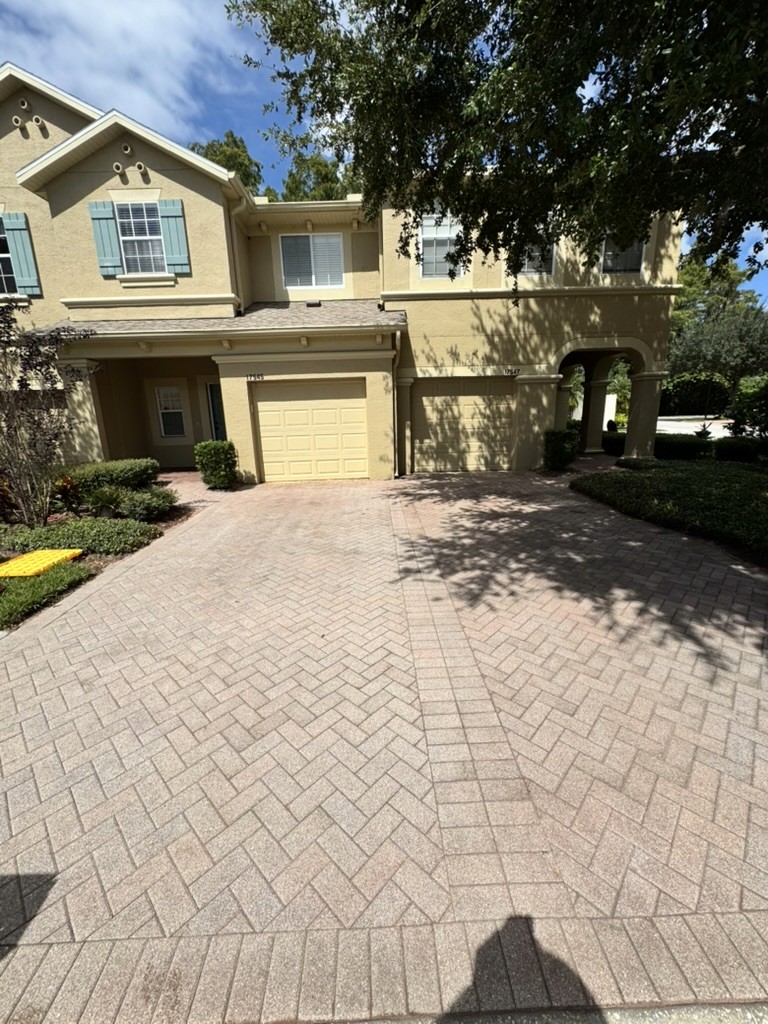
Pavers
Pavers clean well at moderate pressure. The caution is the joints. Too much force blows out the sand that keeps the units interlocked, so joints usually need re-sanding after a thorough cleaning. More on this in how professional driveway cleaning improves curb appeal.
Brick and Block in Sound Condition
Solid masonry takes pressure well as long as the mortar is intact. Crumbling or previously repointed mortar is a different story and needs a much lighter touch.
Pool Decks
Most pool deck surfaces clean up well, though pressure has to be matched to the finish. Textured and cool-deck coatings need noticeably less force than plain concrete.
Vinyl Fencing
Vinyl is durable and non-porous and responds well to cleaning, though it still does not need extreme pressure to come clean.
Concrete Curbing, Steps, and Hardscape
Standard hardscape elements are all fair game at appropriate settings.
Surfaces That Need Soft Washing Instead
These need low pressure plus a cleaning solution. Force is the wrong tool here.
Roofs of Every Type
Asphalt shingle, tile, and metal roofs should only ever be cleaned at low pressure. Pressure strips shingle granules, cracks tile, and drives water where it does not belong. There is a full explanation in is soft washing safe for your roof.
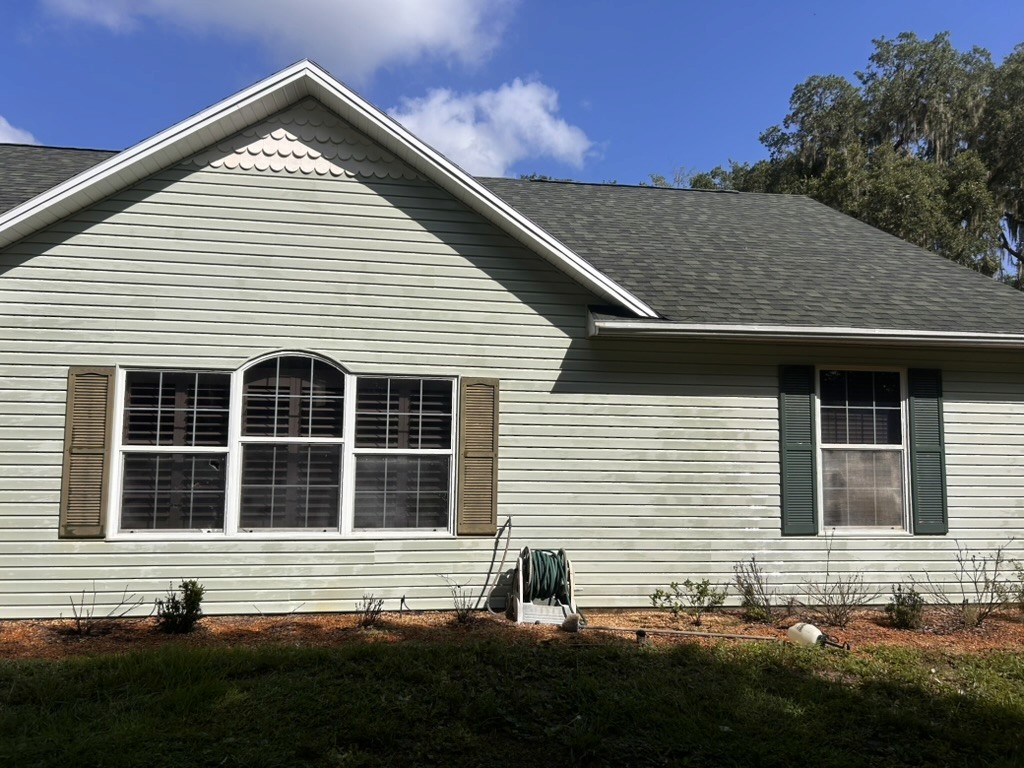
Vinyl and Painted Siding
Lap siding overlaps, and high pressure aimed upward forces water behind the panels where it does not dry out. Painted surfaces also lose paint under pressure.
Stucco
Stucco is porous and often has hairline cracks. Pressure widens them and pushes moisture into the wall assembly.
Soffits, Fascia, and Gutter Exteriors
All of these are lightweight, often vented, and easy to force water into or behind.
Lanai and Pool Cage Screening
Screen mesh tears and stretches under pressure. It cleans up well with low-pressure application and rinsing.
Wood Fencing and Decking
Pressure raises the grain, splinters the surface fibres, and shortens the life of the boards. Wood cleans best at low pressure with a suitable solution.
Outdoor Furniture and Screens
Fabric, wicker, and lightweight aluminium furniture are easily damaged and should be washed gently.
Surfaces to Keep the Pressure Washer Away From Entirely
Windows and glass. Pressure can break the seal on double-glazed units and force water past weatherstripping.
Electrical panels, outlets, and exterior light fixtures. Obvious once stated, and still a common cause of damage.
Air conditioning condensers. The fins bend easily and the unit is not built for directed high-pressure water.
Damaged or flaking paint on older homes. Where lead-based paint may be present, disturbing it creates a containment problem, not just a mess.
Asphalt shingles, again. Worth repeating because it is the single most expensive mistake.
Old or failing mortar. Pressure will remove it.
Anything with an existing leak or gap. Cleaning does not fix that, and pressure makes it worse.
How the Same Surface Can Need Different Treatment
Wood fences can vary in condition and need different handling.
Condition questions worth asking before any surface is cleaned:
Is the paint or coating sound, or already flaking?
Is the mortar or joint material intact?
Are there existing cracks, gaps, or areas of rot?
Has the surface been sealed, and is the sealer still in good condition?
How old is it, and has it been cleaned before?
The Practical Rule of Thumb
If a surface is something you walk on and it is made of concrete, stone, or masonry, pressure is usually appropriate. If a surface is part of the building envelope, painted, screened, or made of wood, it should be soft washed. If the stain is green, black, or streaky it is biological and needs a cleaning solution regardless of which method applies. The full comparison is in pressure washing vs soft washing.
Frequently Asked Questions
Can I use one pressure setting for the whole house?
No, and this is where most homeowner damage originates. A driveway and a soffit need very different settings, and a rented machine set for concrete will mark siding.
What about the tip on the wand?
Tip angle changes the concentration of the spray as much as the pressure setting does. A narrow tip held close to a surface can etch concrete, let alone siding. Distance from the surface matters just as much as either.
Are painted concrete floors safe to clean?
With care. Painted and epoxy-coated surfaces vary enormously in how well the coating is bonded, and pressure can lift it. These are best treated as coated surfaces rather than as concrete.
Can everything be done in one visit?
Usually yes. A typical visit might soft wash the roof, siding, and screen enclosure and then pressure wash the driveway, walkway, and pool deck, adjusting equipment between surfaces.
How do I know a company will use the right method?
Ask them directly, surface by surface, before booking. Anyone who describes putting high pressure on your roof or your siding has answered the question.
Matching the Method to the Material
Almost every horror story about pressure washing comes down to the same thing: the right tool used on the wrong surface. Concrete does not care. Shingles, stucco, screens, and wood care a great deal.
Liberty Power Wash cleans homes and commercial properties throughout Spring Hill, Weeki Wachee, Brooksville, Hernando Beach, and surrounding Hernando County, matching pressure and method to each surface on the property. Get a free estimate and we will walk you through what your home needs before any work begins.